Basin 2 Cycle 5 Rotating Basin Report and Companion Web Application
OCC’s Small Watershed Rotating Basin Monitoring Program provides comprehensive, long-term water quality data by routinely sampling at more than 250 fixed stream locations across five planning basin groups in Oklahoma. Each basin group is sampled for two out of five years on a rotating schedule to ensure consistent statewide coverage. The program focuses on determining which waters are impaired or at risk, identifying pollutant types and sources, and understanding how land use influences water quality.
Basin 2 Cycle 5 Report
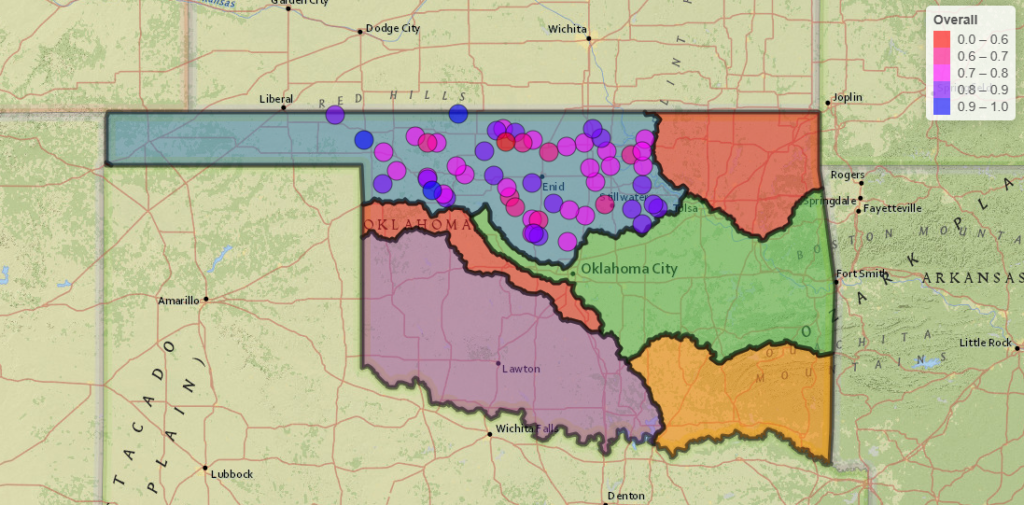
Each year, the Water Quality Division evaluates and reports on monitoring results from one of the five Basin Groups. In 2025, OCC released findings for the 56 monitored streams in Basin 2, which includes the Cimarron, Upper Arkansas, and Upper North Canadian River basins. This reporting cycle, we incorporated new analyses to better assess long-term trends in stream health, characterize primary pollutants, and identify potential watershed-scale sources. Additionally, a companion web application has been introduced to improve data access, usability, and user interaction with OCC’s monitoring information.
occwaterquality.shinyapps.io/Rotating_Basin_Report_app/
Streams in the Upper North Canadian, Upper Arkansas, and Cimarron basins were generally in fair condition, but a sharp decline in streams meeting E. coli standards was the most notable change from the previous monitoring cycle, with only seven streams attaining the primary body contact beneficial use, compared to 30 in Cycle 4. The cause of increased E. coli impairments is unclear, though unusual weather patterns (an early drought followed by heavy rain) may have temporarily elevated bacteria levels. Biological assessments showed a mixed picture: fish communities were generally healthy, and habitat quality was fair to excellent, but macroinvertebrate communities were widely degraded. Risk analyses indicated that degradation may be a result of high nutrient levels (especially TKN (Total Kjeldahl Nitrogen) and phosphorus), and poor dissolved oxygen swings. Further analyses identified both natural factors (regional geology and rainfall chemistry) and human land use (row-crop agriculture, housing density, and oil and gas development) as key predictors of these nutrient-related stressors.
The results of these analyses are not meant to identify definitive cause and effect relationships between land-use and stream degradation, but to understand the potential conservation practices best suited to improve the water chemistry and biological communities of regional streams. The results point to the need for watershed-scale conservation strategies that reduce nutrient runoff, improve infiltration, and restore riparian buffers.