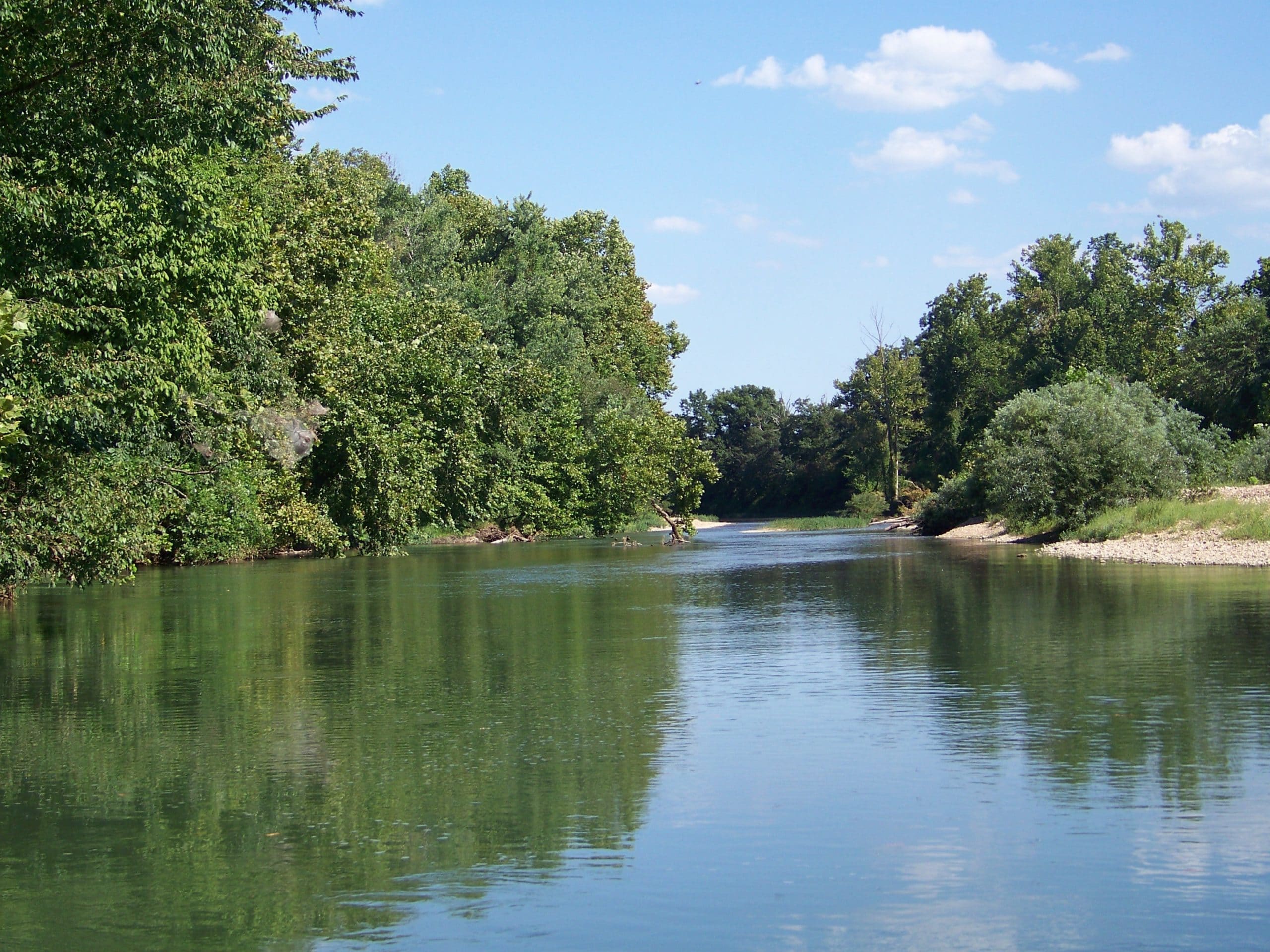
Classifying Oklahoma Streams by Their Natural Characteristics and Fish Communities
If asked to describe different types of aquatic environments, many of us will think of the reservoirs where we fish or swim in the summer, or the large rivers that swell after several days of heavy rainfall. But it is the small, barely noticed streams that are typically shallow enough to walk across that are responsible for most of the diversity of fish in the state. The Oklahoma Conservation Commission (OCC) periodically surveys the fish communities in these streams to determine the long-term water quality.
To better understand which fish species to expect in a given stream, we have analyzed more than 20 years of OCC monitoring data and identified six stream types. Streams of each type share similar characteristics, such as geology and climate, that influence the fish species that can live there. Understanding which fish are expected in a stream is important because it helps us identify when landscape changes may degrade fish communities.
West of I-35, we have determined that there are Plains and Valley-type streams. The Valley streams are deep and silty and may contain species that are like those found in reservoirs (e.g., Channel Catfish, Freshwater Drum, Smallmouth Buffalo), whereas the Plains are shallow, sandy, and have faster-moving water. Many of the fish found in the West Plains are small and silver, but the Plains Killfish, Red River Pupfish, and the Red Shiner are notable.
Four stream types were identified East of I-35, including Eastern Plains and Valleys. These stream types share characteristics with their western counterparts but have more water and are less salty due to differences in the surrounding climate and geology. In the East Plains, we have more minnow species, along with darters and redhorse. The East Valley streams have the greatest diversity, often with more than 40 species occurring within a 1/4 mile stretch of stream. East Valleys have the greatest diversity of sunfish, including Redspotted Sunfish, Flier, and Banded Pygmy Sunfish.
There are also two rocky stream types in the Eastern part of the state. The Highlands are named after the Ozark Highlands, but include streams from parts of the Ouachita, Arbuckle, and Wichita mountains. Conversely, the Hills stream type is more common in the Ouachita Mountains but also occurs in the Flint Hills. Compared to the Highlands, the Hills receive less groundwater input and are very low in nutrients. Darters, suckers, and colorful minnows are common in these rocky stream types.
If you are intersted in reading the peer-reviewed manuscript, it can be accessed at: https://peerj.com/articles/20234